A water-powered saw
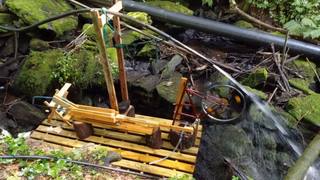
I have spent many summers building increasingly large and intricate waterwheels in a stream by my family’s cottage. This summer was no different—except that it would be a lot larger and a lot more powerful. Instead of making the waterwheel in the stream, I brought the stream to the waterwheel.
Foundation
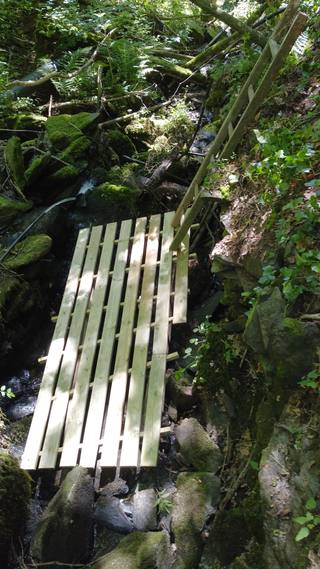
For the scope of the project, it required a proper, sturdy foundation. That became the start of the platform.
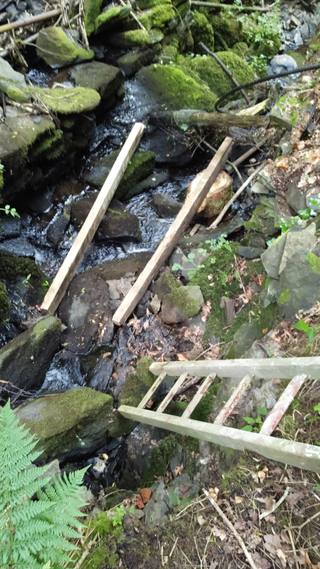
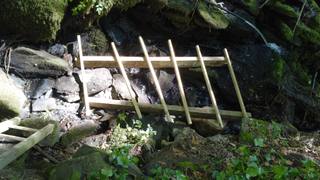
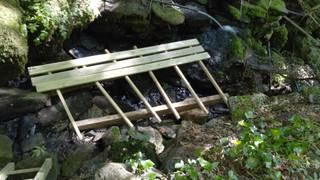
The stage is complete
The stage was ready for the actual waterwheel.
Origin of the waterwheel
My grandfather had many old bikes, and I was free to choose any of them for transformation.
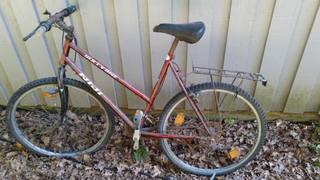
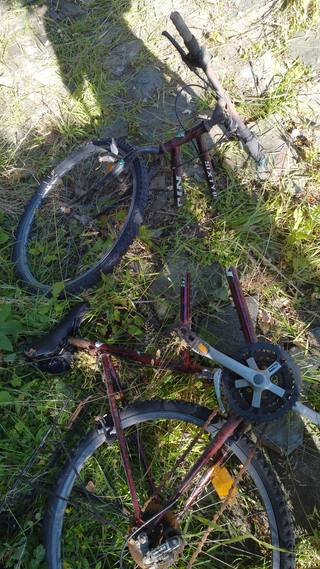
I only needed the rear, so the front was cut off.
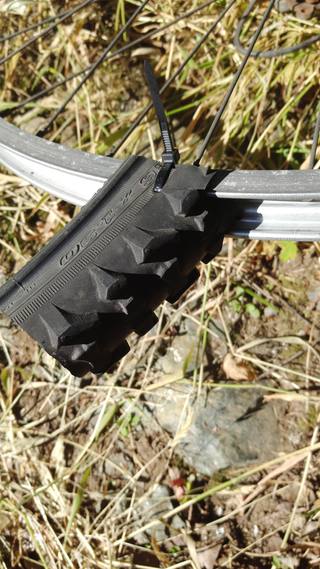
I realized that the tire could be cut into segments that would work as fins.
And so the waterwheel was complete.
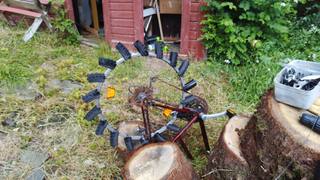
Source of water
I was not the first person to build a waterwheel in this stream, and that was fortunate: earlier builders had left behind a few small water hoses and one very large one. For many reasons, I settled on a smaller hose.
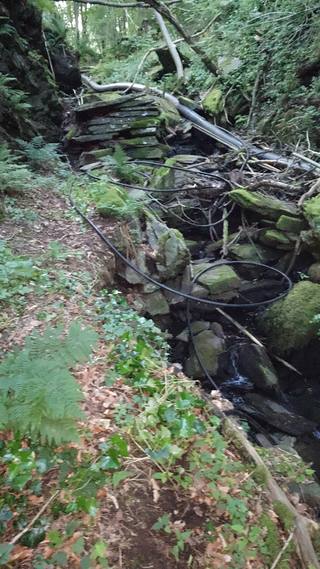
After dragging one end of the hose about 100 metres up the stream, with a 7–10 metre incline, and getting the water moving through it, I had a good water source.
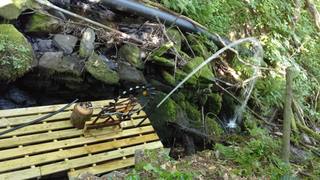
The saw
After a few failed ideas, I settled on a wheel-based, rail-guided platform.
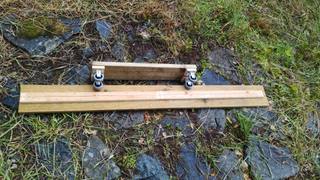
An important idea was that the saw should fall onto the wood, so it could theoretically cut through something thick.
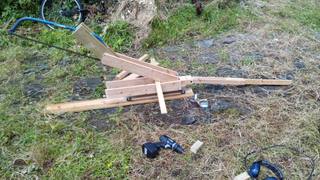
The platform has two joints: one for the saw and one for the connection to the bicycle pedal.
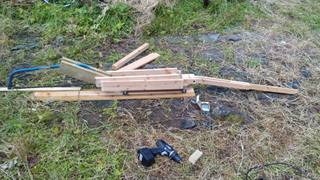
The finished project
Finally, I put it all together. As anyone who has worked on a problem will know, there were a few hiccups.